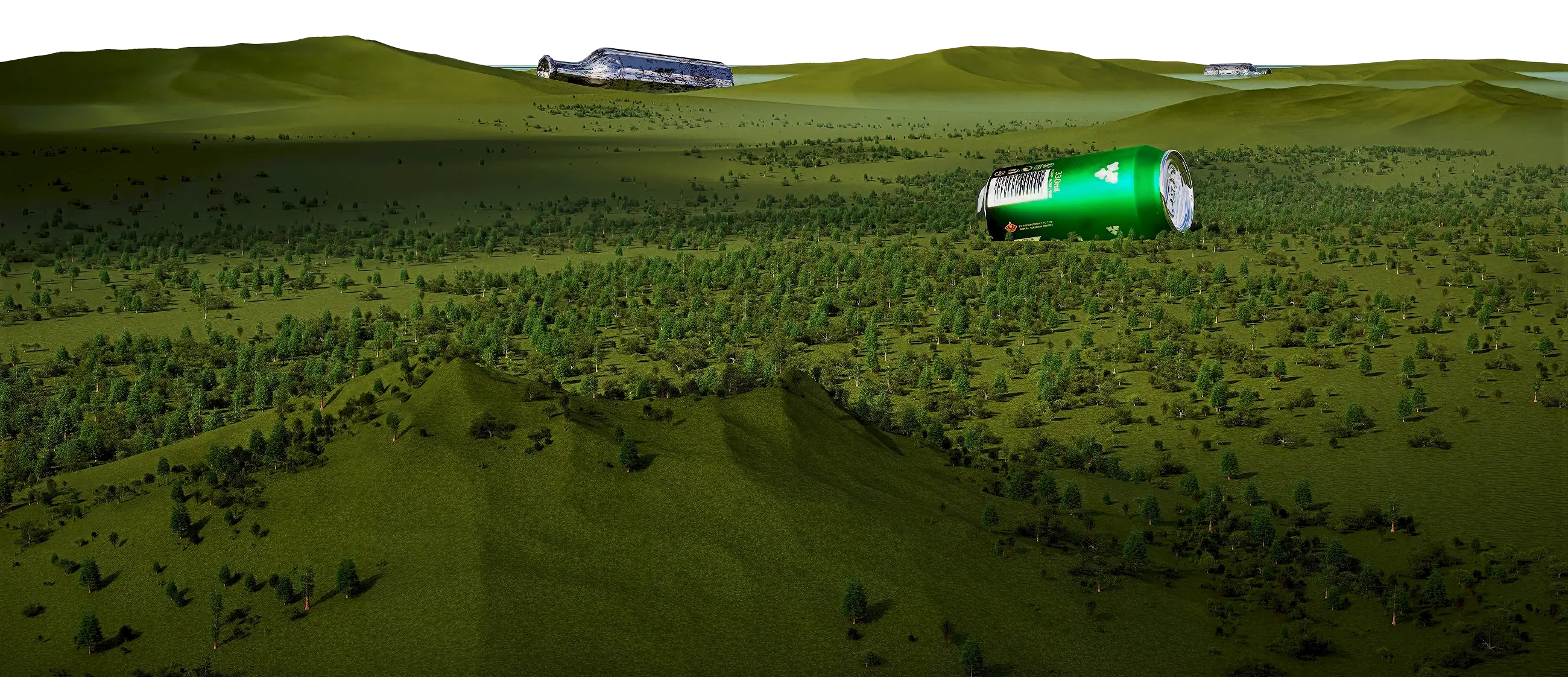
we turn waste into value
Smart Recycling Invest

clean future starts here

Global Problem
While some see trash, we see opportunity

the world generates over 2 billion of MSW every year

Over 70% of this waste is not recycled

Potential economic losses reach up to $400 billion annually

From waste to value

Asia

Generates 870M tons of waste annually, with most materials still unrecovered — a $100B+ economic opportunitywaiting to be unlocked

North America

Generates around 300M tons of waste annually, with high consumption and low material recovery — a $60B+ economic opportunity in recycling and circular infrastructure

Europe

Produces 250M tons of waste each year, with strong regulation but untapped secondary material flows — representing $50B+ in recoverable economic value

Africa

Generates 180–250M tons of waste, much of it organic — yet lost materials equal over $8B in missed economic gains each year

South America

Produces 230M tons of waste annually, with low recovery rates — leaving $10–12B of economic value untapped

MENA Region

Creates 150M tons of waste each year, especially packaging and plastics — a $6–8B opportunity in secondary materials and recycling

5

Management

The central layer of expertise and investment that ensures long-term performance, transparency, and sustainability across all stages

4

Manufacturing

Recycled materials are used to produce new goods, closing the loop and returning value to the economy

3

Recycling

Waste is transformed into energy and reusable materials, reducing landfill use and recovering valuable resources

2

Sorting

Advanced technologies sort and prepare waste streams, ensuring efficiency and quality across the entire recycling system

1

Collection

The starting point of a new circular economy, where waste is separated at the source and a culture of responsible collection is established

Projects & Global Presence

We show directions, not individual cases.Repeatable solutions, proven models, scalable economics.

1

Sorting
Complexes (SCC)

Creation of basic infrastructure for the separation and preparation of recyclable materials

  • Up to 90% of recyclable fractions are recovered
  • Capacity: 50,000 to 300,000 tons per year
  • Ready for integration with recycling facilities.
2

RDF
and Compost

Conversion of unsorted and organic waste into energy and soil resources

  • RDF up to 25% of the waste stream
  • Composting up to 30% of the organic fraction
  • Reduction of methane and CO₂ emissions by up to 60%
3

Recycling of secondary raw materials

Plastic, glass, paper, metal Production of industrial-grade secondary materials

  • Plastic: granules — up to $500/t
  • Glass: cullet — up to $200/t
  • Paper/cardboard — up to $300/t
4

Manufacturing of finished goods

Production of high-value-added products from recycled materials

  • Products: pipes, packaging, furniture, building materials
  • Increasing local employment
  • Increasing export potential

Impact & SDGs

Global results

Key metrics:Up to 40% of waste is recycled. Over 30,000 new jobs
Potential return to the economy: up to $100 billion per year. Support for the UN Sustainable  Development Goals (SDGs)

Combating climate change

Reduction of CO₂ and CH₄ emissions

Economic growth and employment

New green jobs

Industry, Innovation, Infrastructure

Creation of factories and MSCs with advanced technologies

Responsible production and consumption

Implementation of circular models

Partnership for Sustainable Development

Joint projects with governments and investors

Smart Recycling Invest – Investment & Partnerships

Smart Recycling Invest is the investment platform of the Smart Recycling Group, focused on structuring and deploying capital into scalable waste recycling and circular economy infrastructure.We partner with institutional investors, government bodies, and strategic stakeholders to develop bankable financial models, public–private partnerships, and joint ventures that deliver long-term, sustainable returns.

E-mail:
Adresse  e-mail:
[email protected]
media:
SM